Canvas paintings with raised gold, mirror mandalas pressed into clay, sculptures made of nothing but wire and thread. Every piece is slow, every piece is mine.
The world moves fast. My work does not. I build up a flower petal over days — layer, dry, layer again — until the canvas is heavy with gold and you can feel the texture from across a room. I press silver mirrors into soft clay before it sets, one at a time, until a mandala catches the light in forty different directions.
Nothing here is printed. Nothing here is perfect. What lives on these walls are hours of quiet, small decisions, and the particular kind of joy that comes from making something with your own two hands.
I teach this too — because the best part of making is watching someone else discover they can make.
“If it can be done by a machine, I'm not interested. I want the thumbprint, the uneven edge, the gold that went a little crooked and stayed that way. — a working philosophy
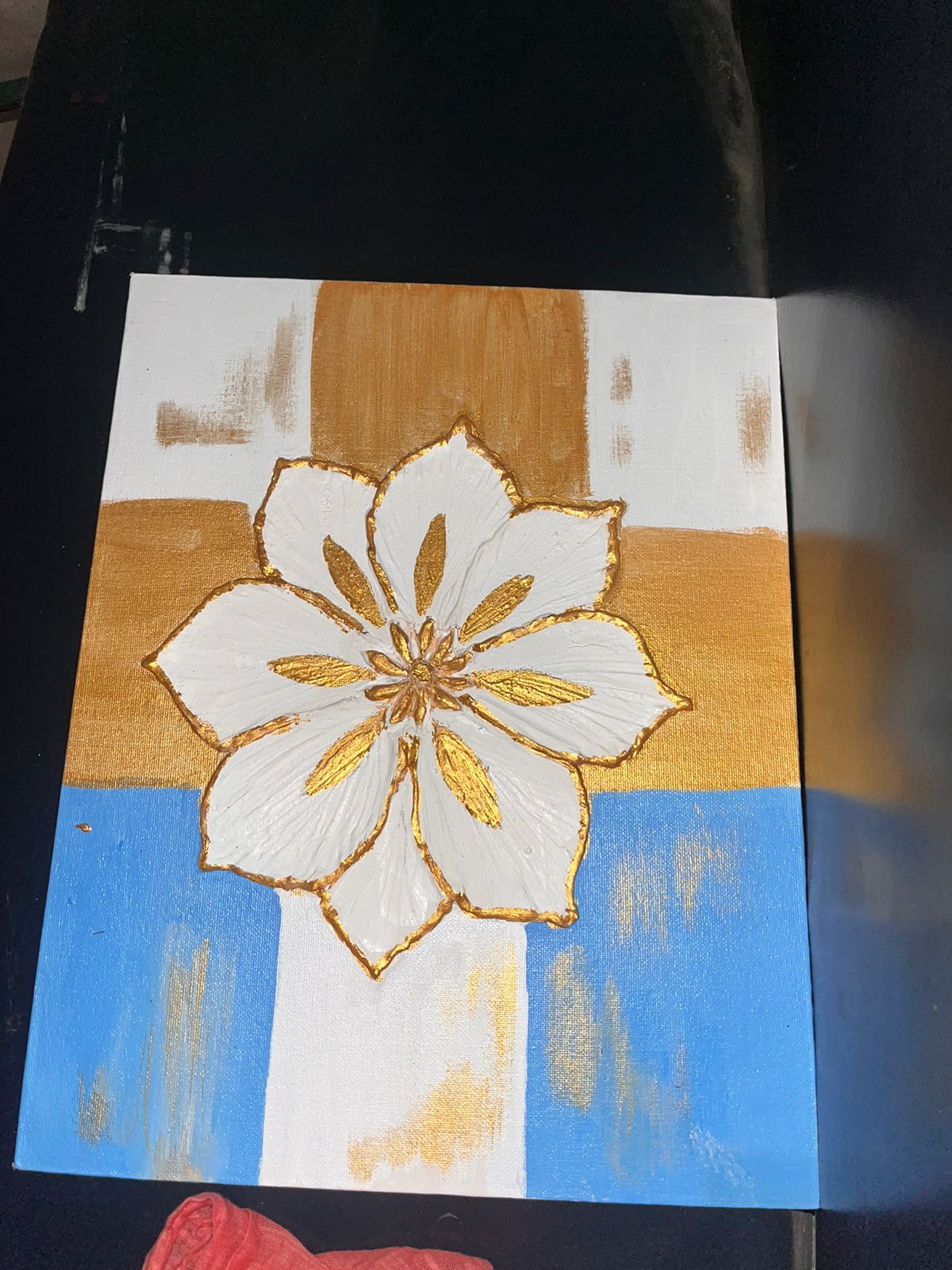
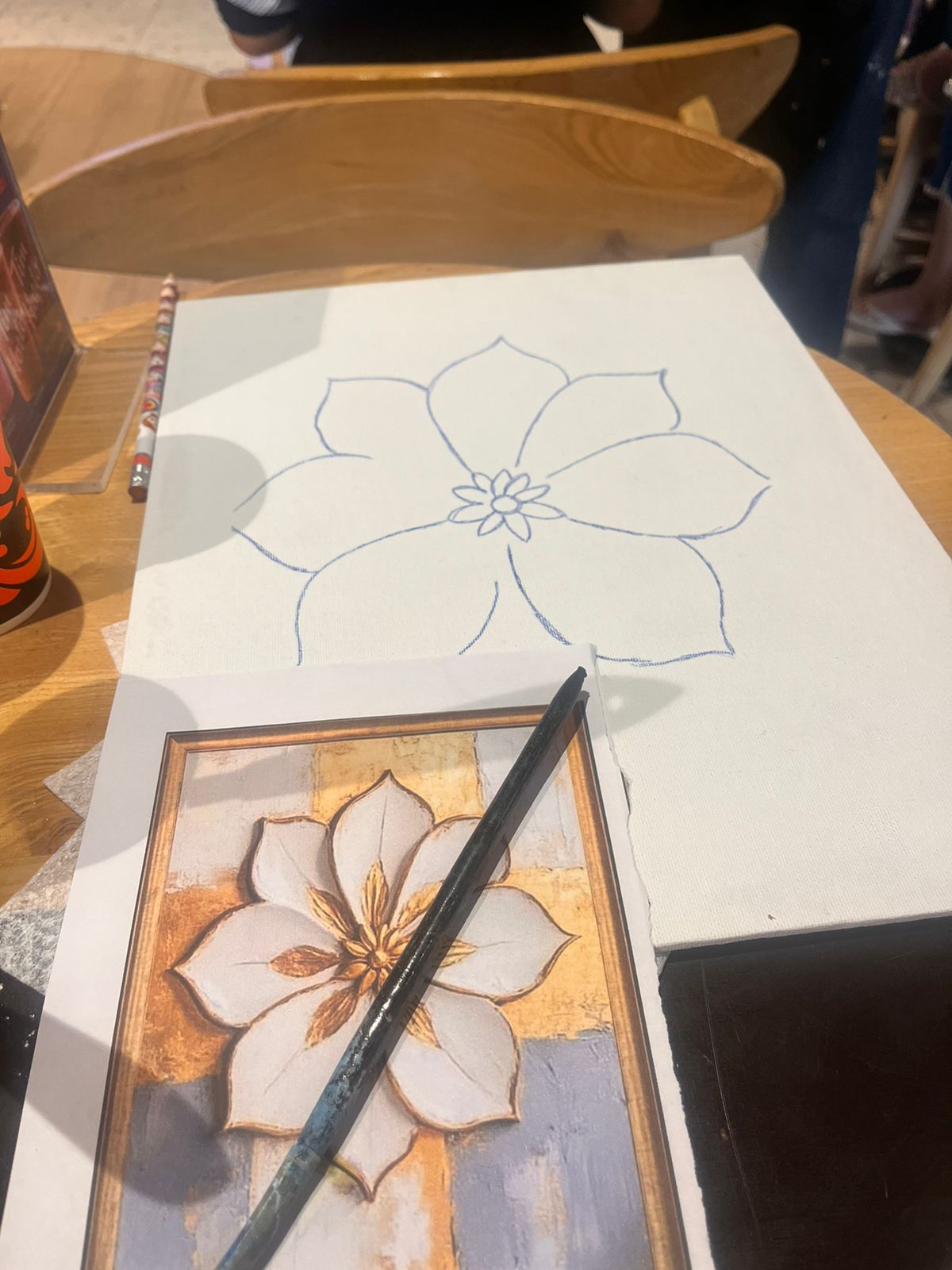
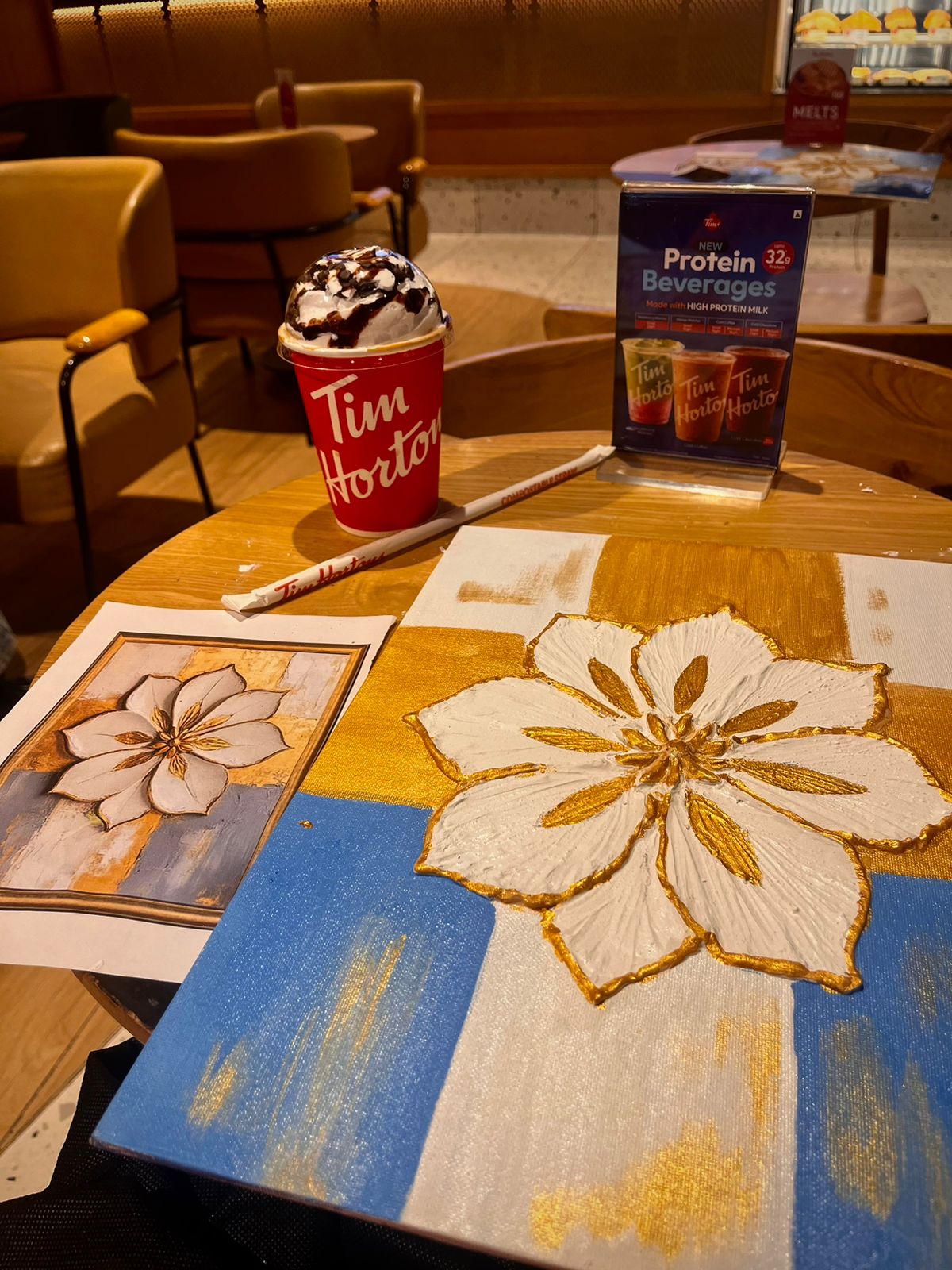
Heavy, raised florals where each petal is sculpted in layers of white modelling paste and outlined in real gold. Painted on canvas that I prime and wash by hand, with blocks of warm ochre and sky blue running beneath — a quiet nod to the sky through a window. Meant to be touched, then hung somewhere catching morning light.
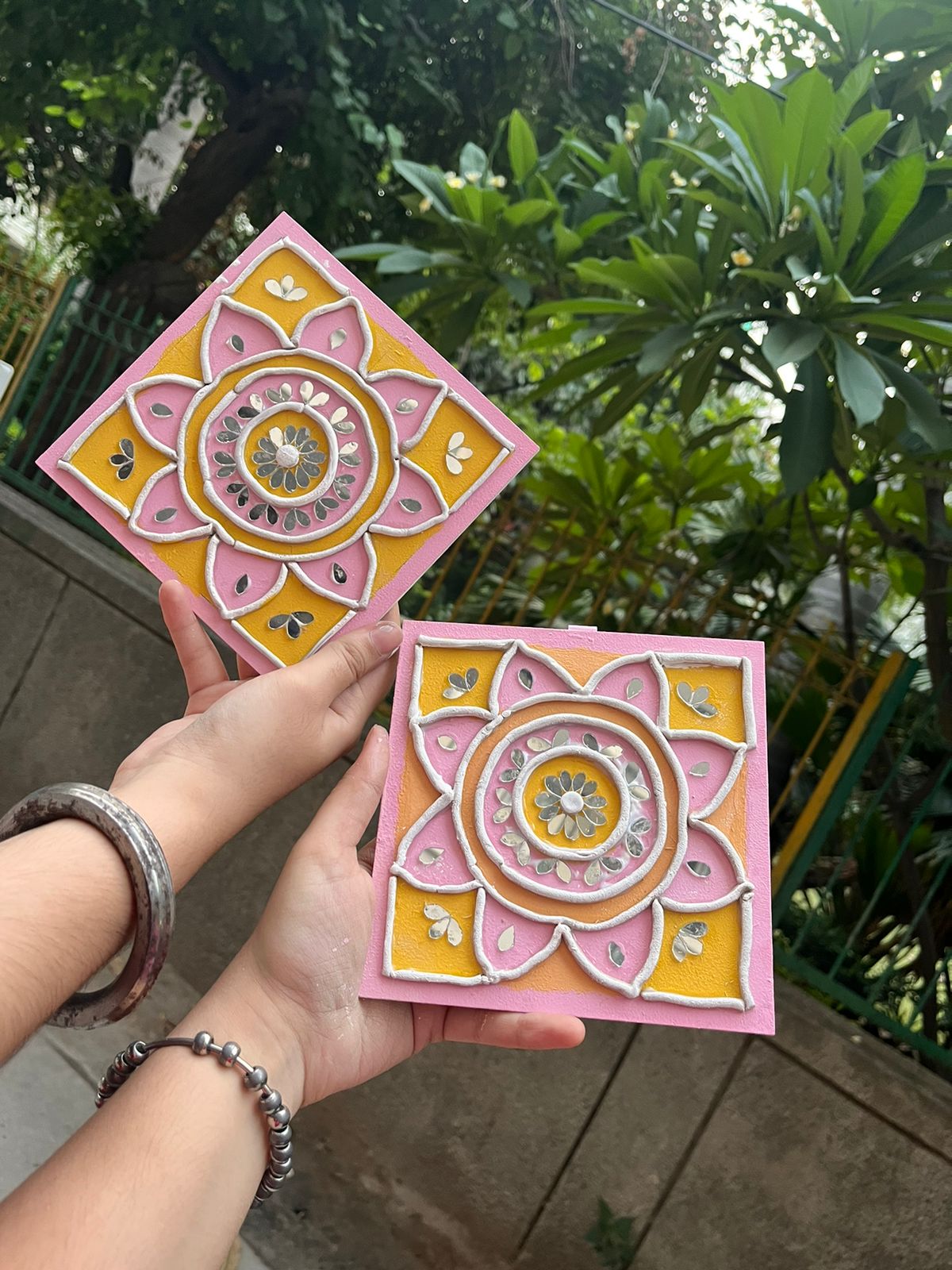
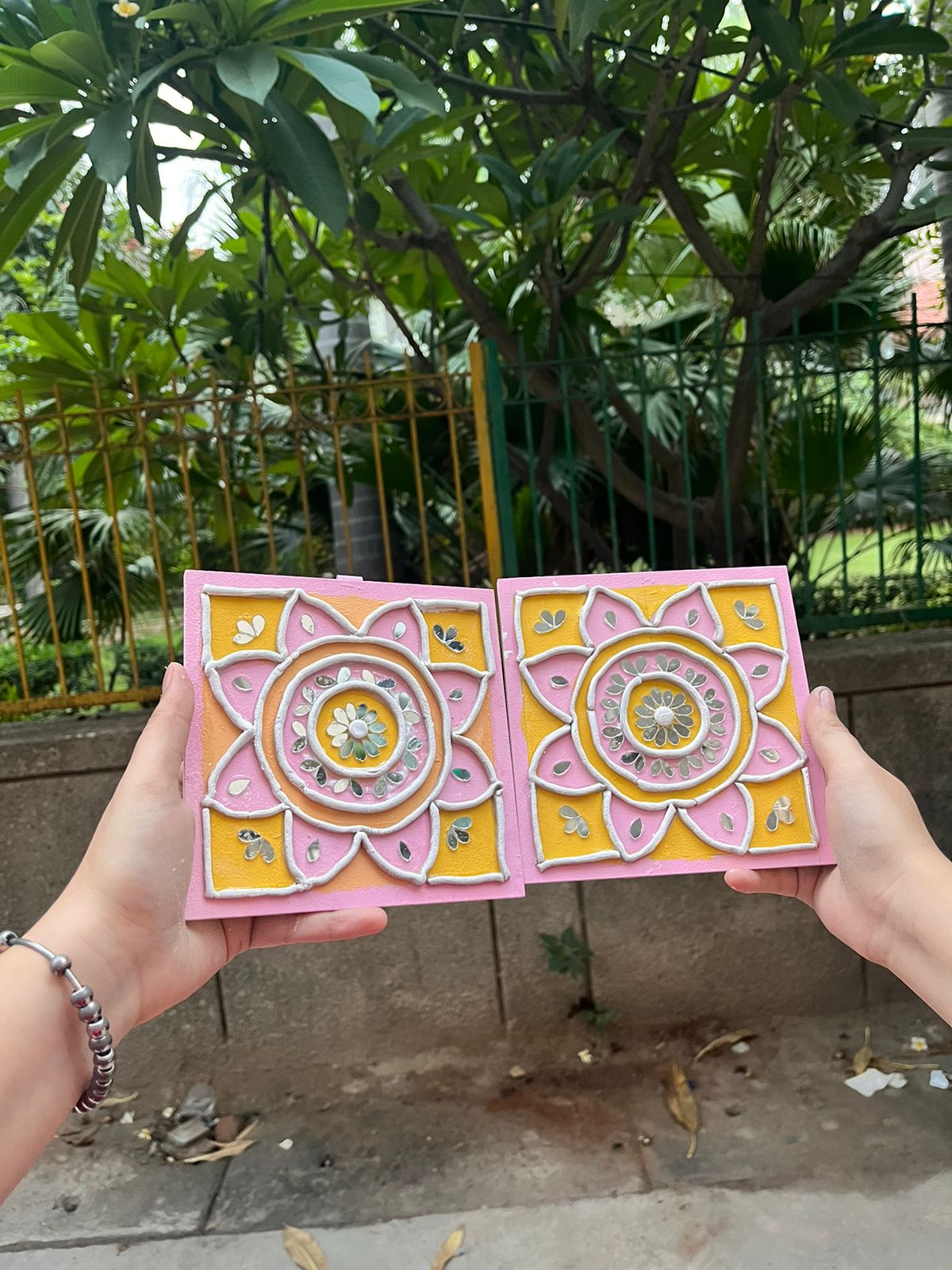
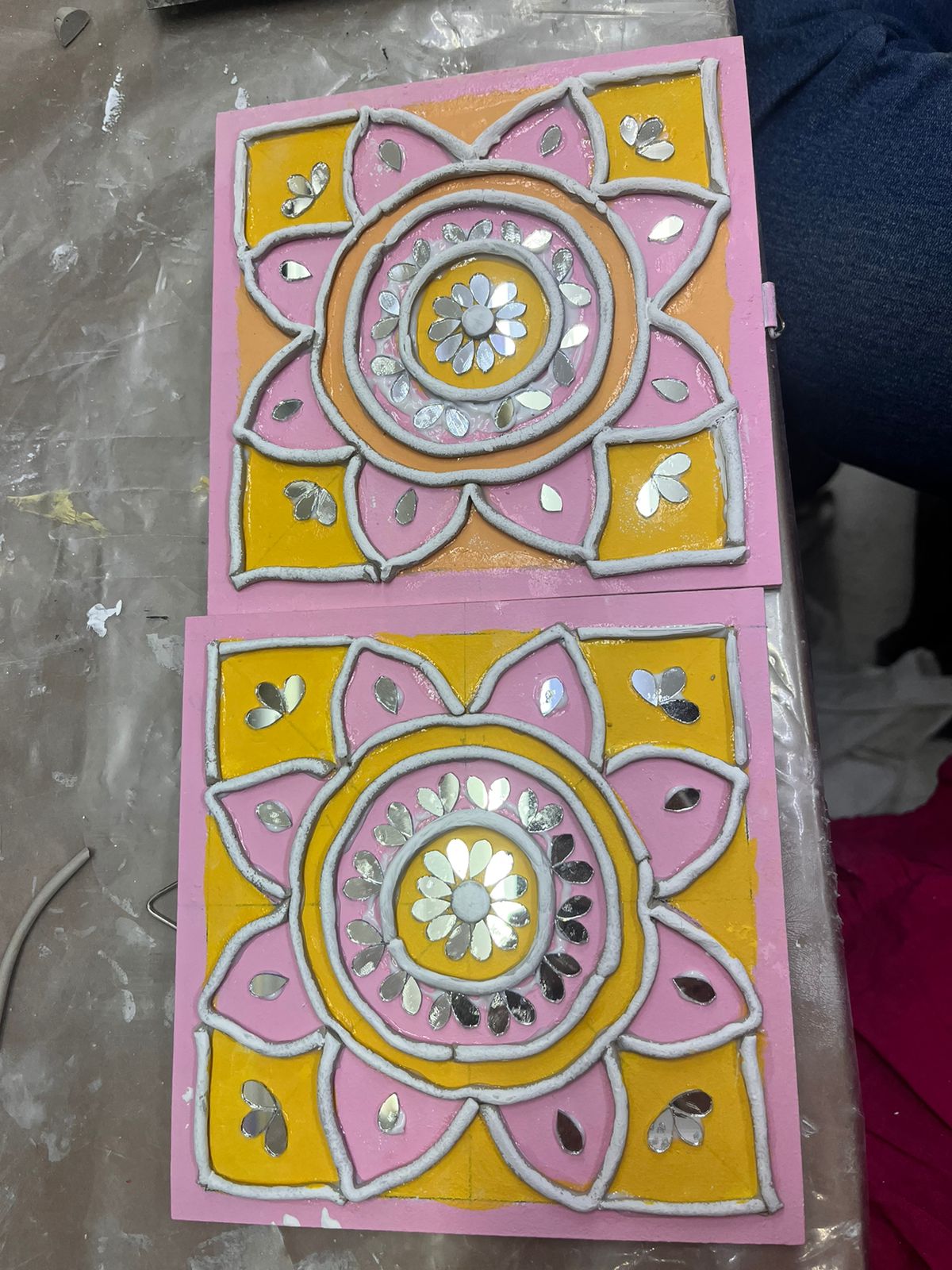
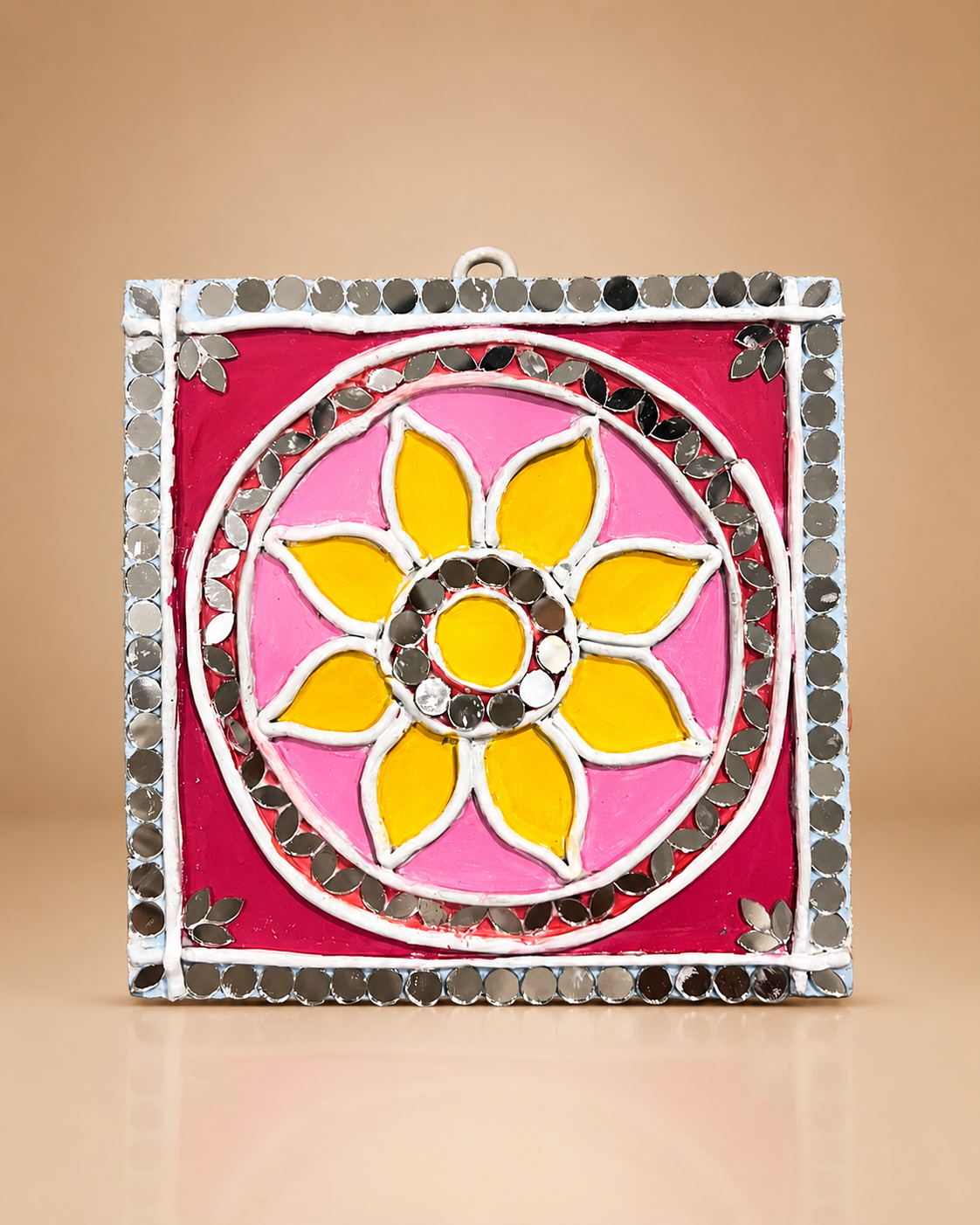
A reimagining of the Kutchi folk craft — raised clay lines drawn freehand, silver mirrors pressed in while the clay is still soft. I've traded the traditional earth tones for saffron and rose, so each tile feels like something found on a summer afternoon. They catch any light in the room and throw it back, a hundred small stars.
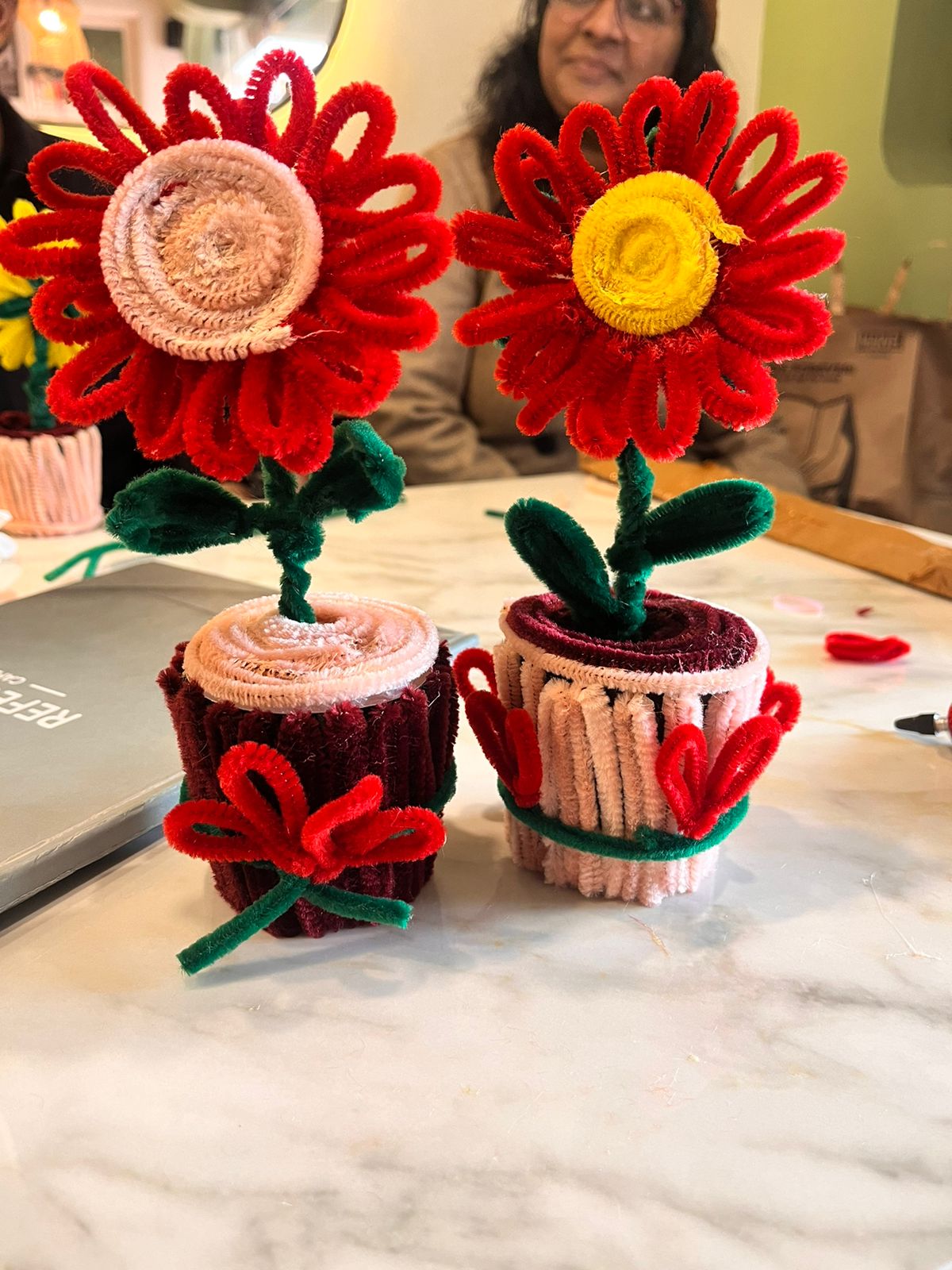
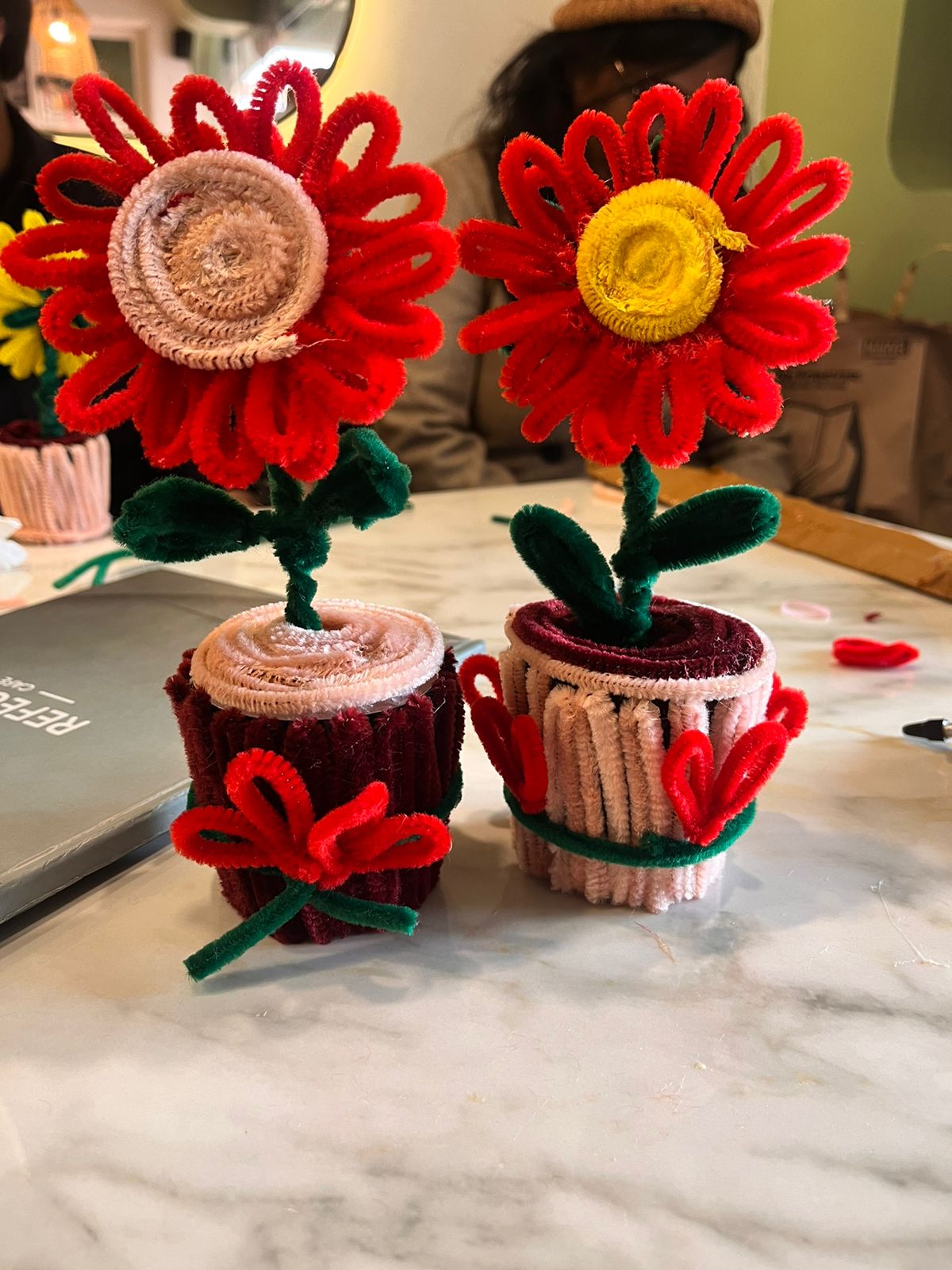
Tabletop bouquets built entirely from chenille stems — the humble pipe cleaner transformed. Looped petals, coiled centres, tiny planters with velvet bows. They started as a study in what happens when you commit completely to the softest possible material, and they've become my favourite thing to gift.
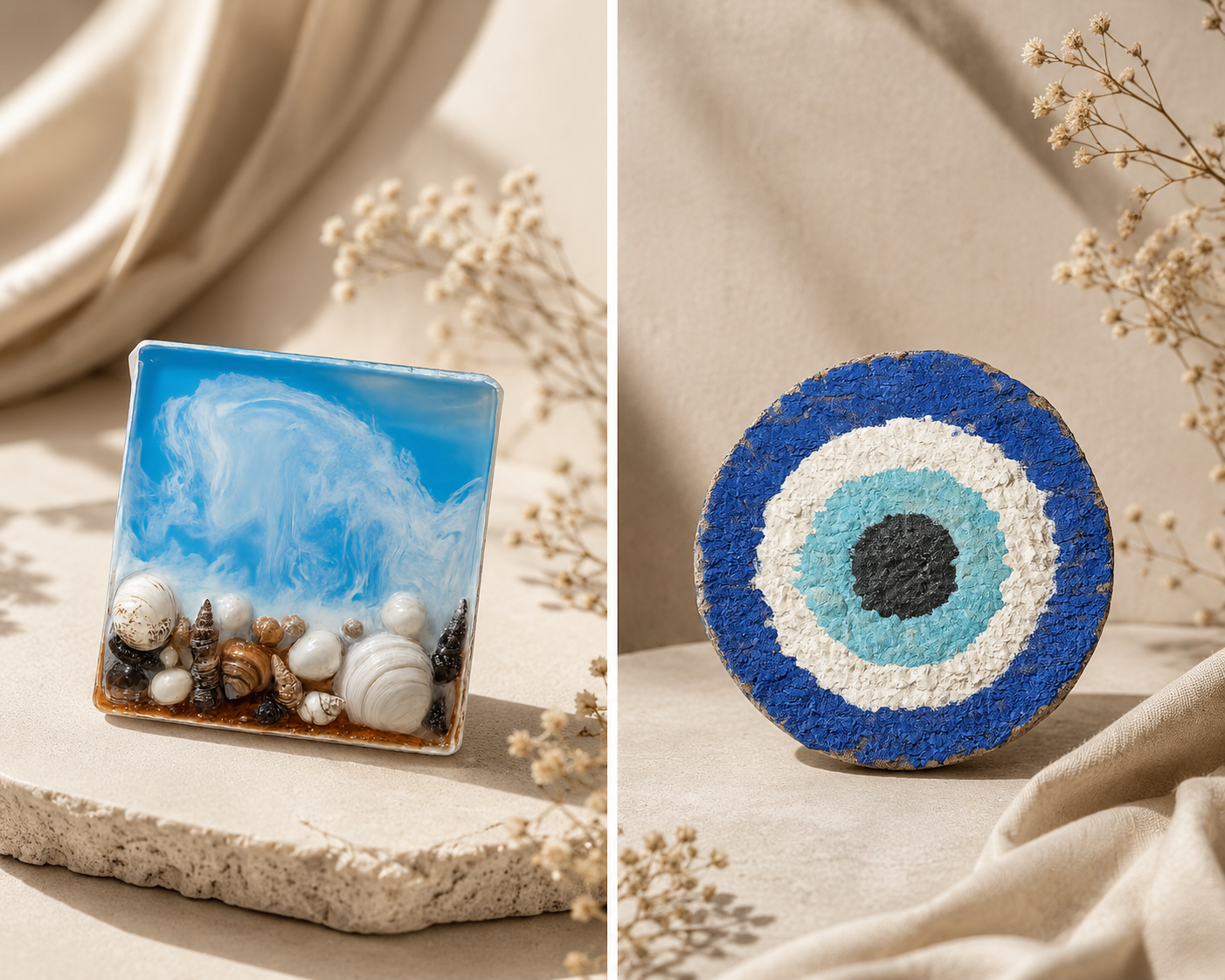
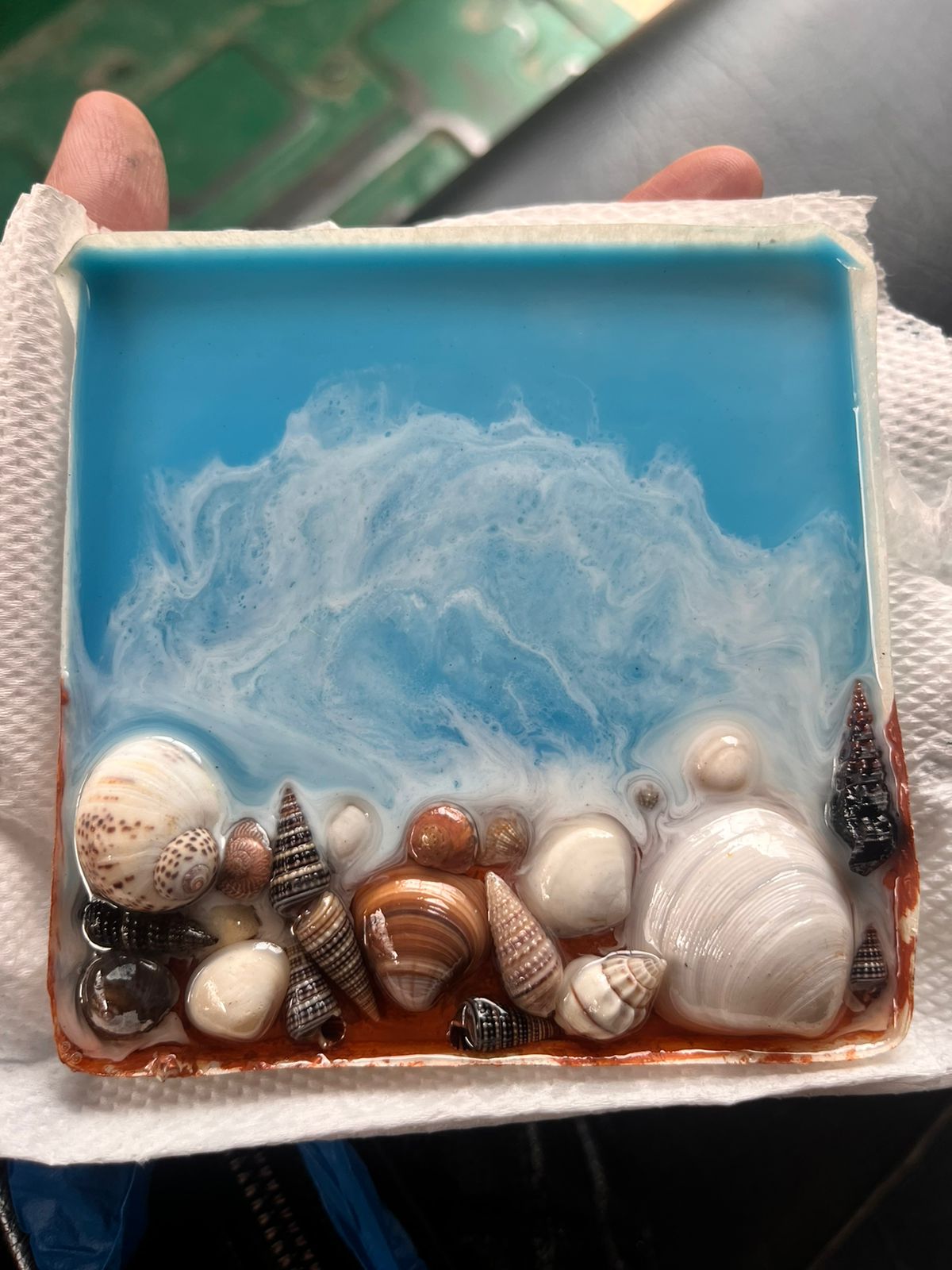
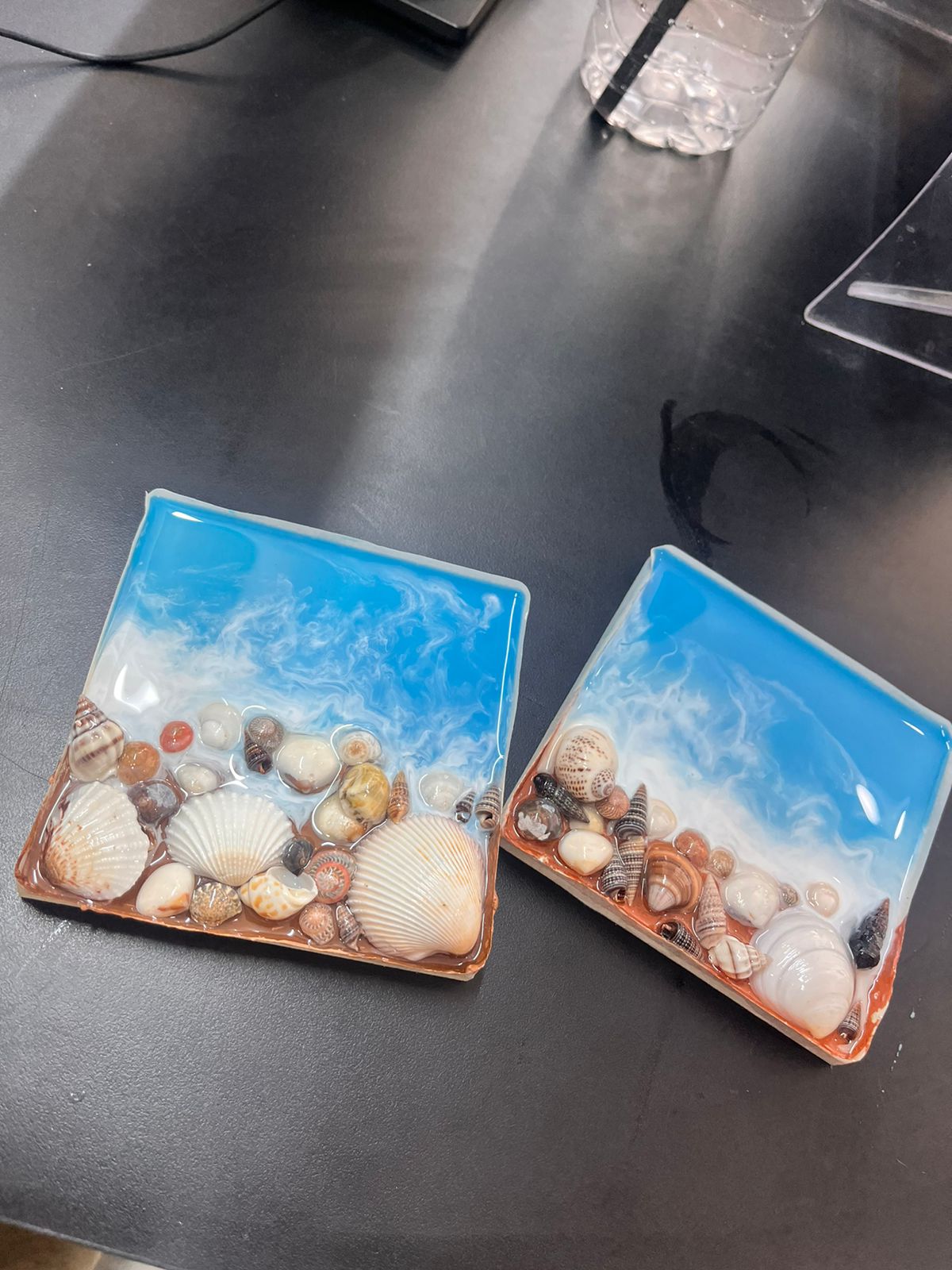
Small square seascapes poured in resin — milky-white foam frozen mid-curl over deep cerulean water, and a beach line of real shells I've gathered, tide by tide. Each tile is a single pour: once it sets, the wave stays exactly where it stopped breaking. They live well on a desk, by a window, anywhere you'd like the sea to follow.
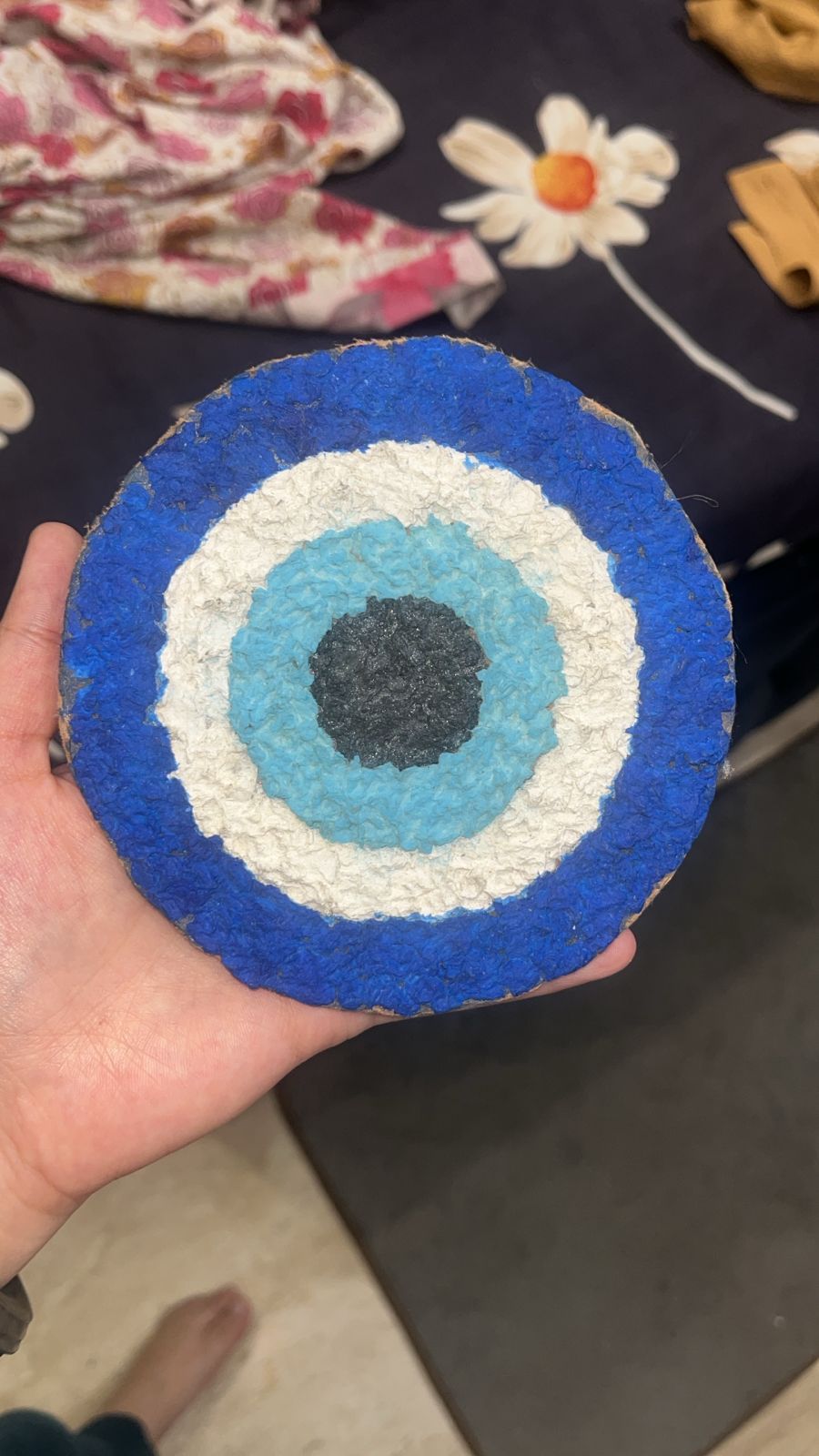
The protective eye remade in hand-torn paper pulp — cobalt rings circling sky blue circling a slate-dark pupil, each layer pressed onto a raw wood disc while still damp. Up close the surface is mossy and fragmented, hundreds of small pieces still legible; from a few feet away the rings snap back into the classical charm. A folk talisman, made the slow way, for a doorway or a quiet shelf.
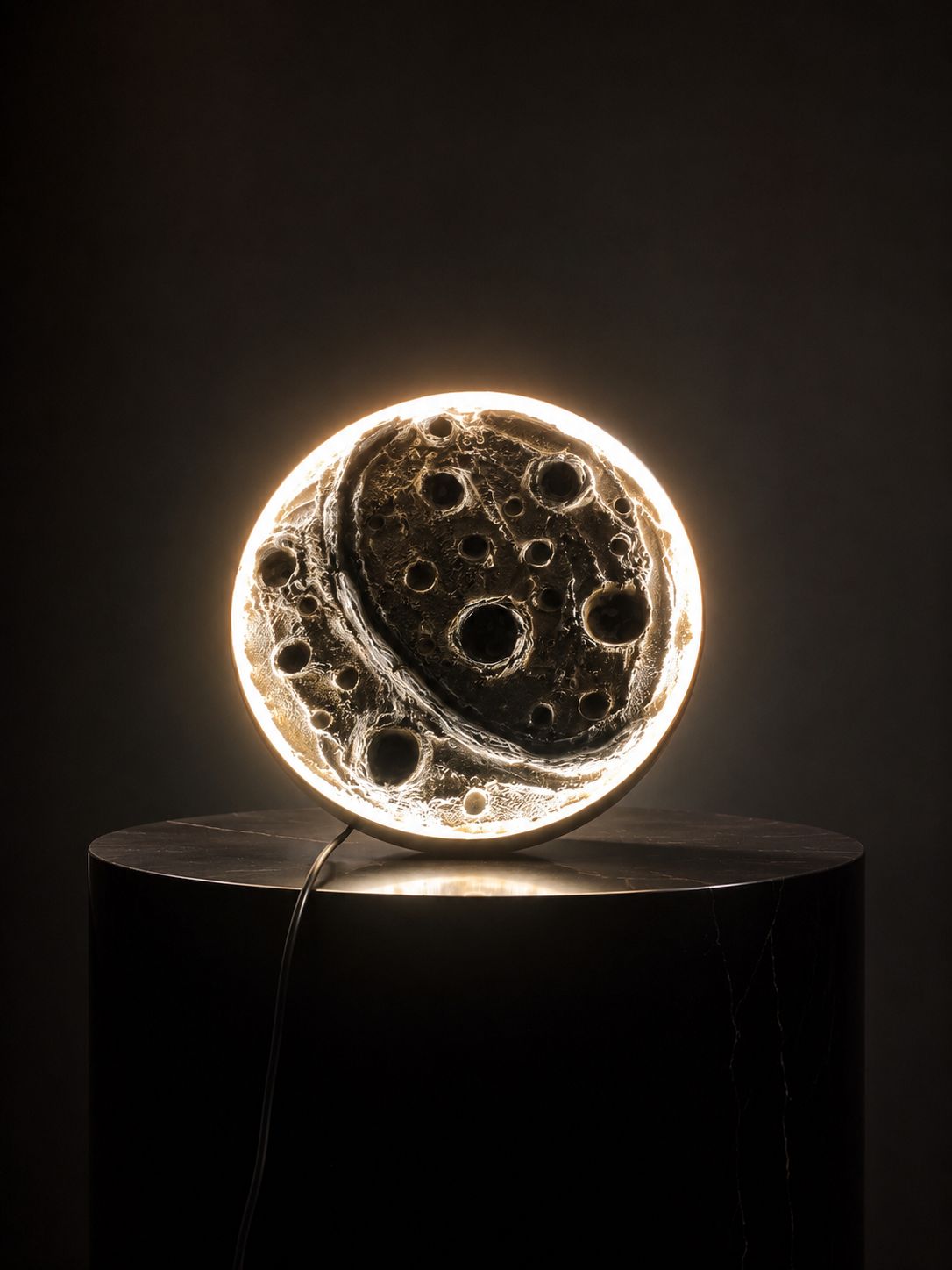
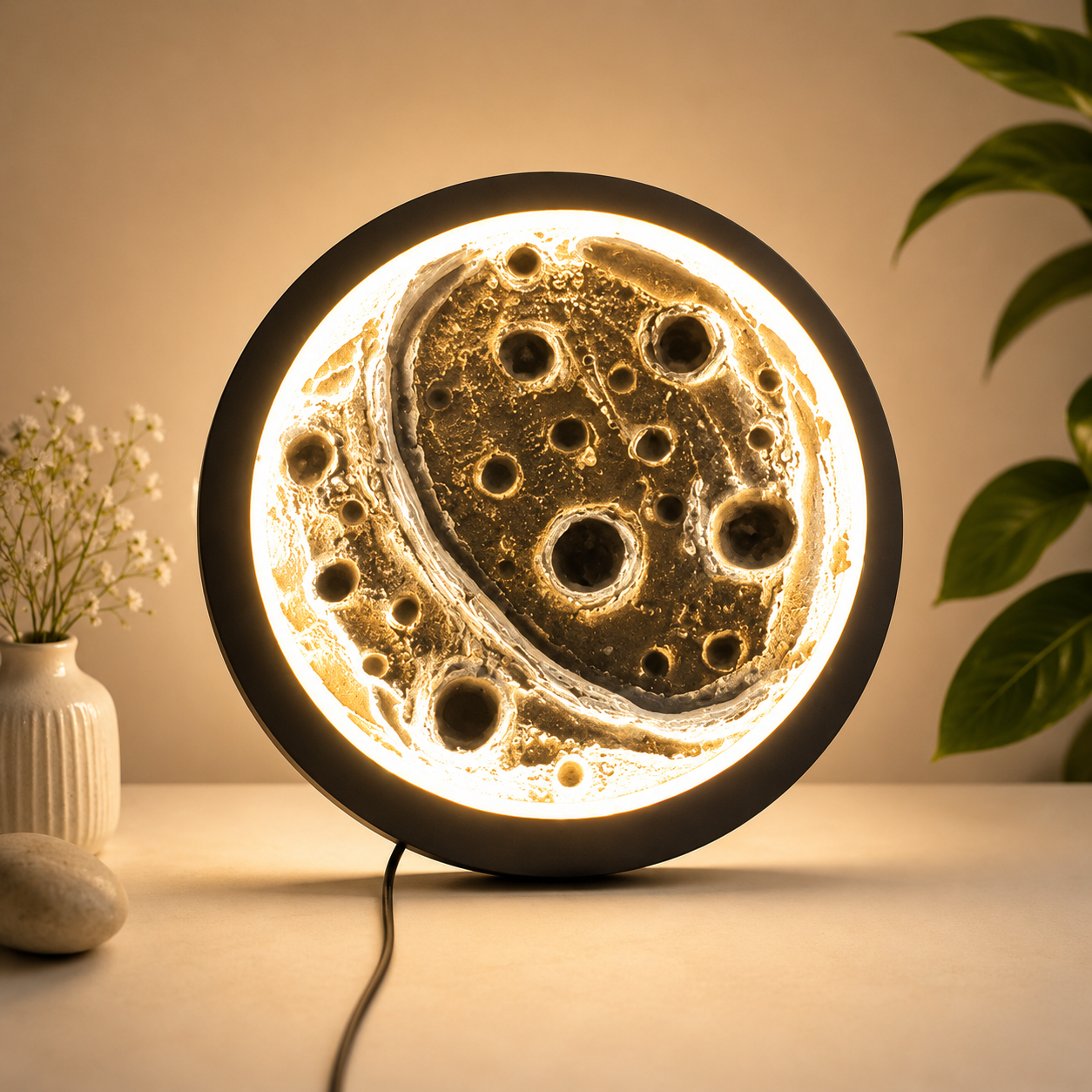
Hand-cast moon lamps — the cratered surface sculpted by hand, then lit from within with a low, warm glow so the whole face shines like the real thing through a telescope. No two are carved the same way; each moon waxes a little differently. Quiet by daylight, and softly magic once the room goes dark.
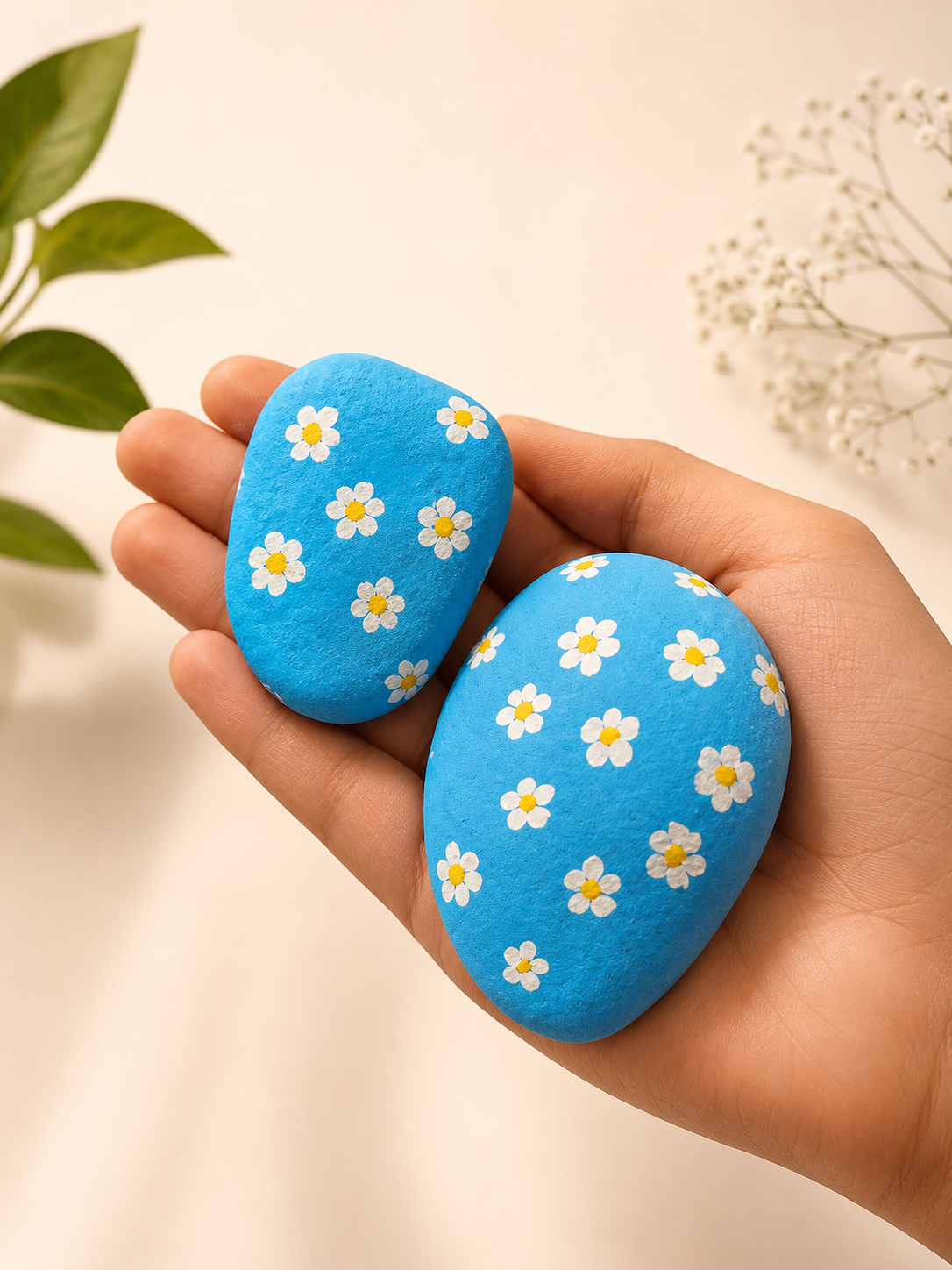
Smooth river stones, gathered by hand and painted into little gardens — fields of white daisies over a sky-blue ground, each petal laid down with the tip of the brush. They're meant to be held, pocketed, and passed on: a paperweight, a worry stone, a small surprise left on a friend's desk.
Small tables. Real materials. No experience assumed, none required. You'll leave with something you made, and hands a little covered in gold.
A full afternoon building a single textured bloom in modelling paste and gold. You'll prime, sculpt, outline, and sign your own canvas.
An evening of Lippan work — we'll draw, coil, and set mirrors into clay until every tile is different and each one yours.
A loose, warm session — you'll leave with a pot of three blooms in colours you've chosen yourself. Great for first-timers.
Every piece begins with something I found — a photograph torn from a magazine, a tile from a temple wall, a flower from the garden. I never trace. I translate.
The canvas is washed three times with watery gold. The wooden tile is primed pink before the clay ever touches it. Foundations are everything.
Every layer has to dry before the next one goes on. I let things sit for a day. I come back and see what the piece wants next.
If a petal is a little crooked, if a mirror tilts, if the gold pools a bit — I leave it. That's the evidence that a person made it, not a machine.
— you bring the curiosity, I'll bring the gold.